

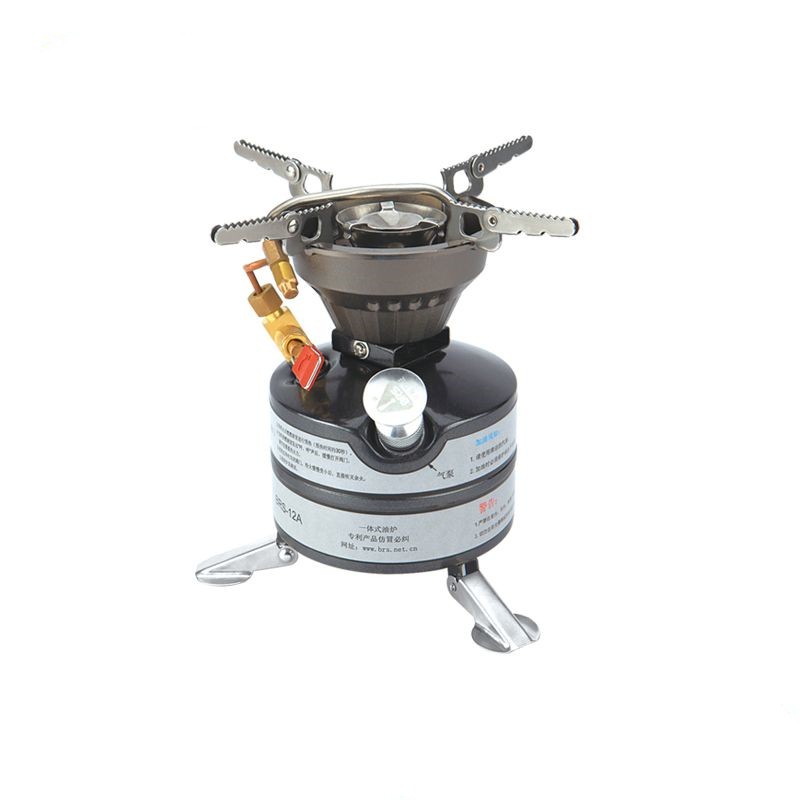


Gasoline camping stove: Reliable 2120W field stove
Original price was: $109.52.$71.19Current price is: $71.19.

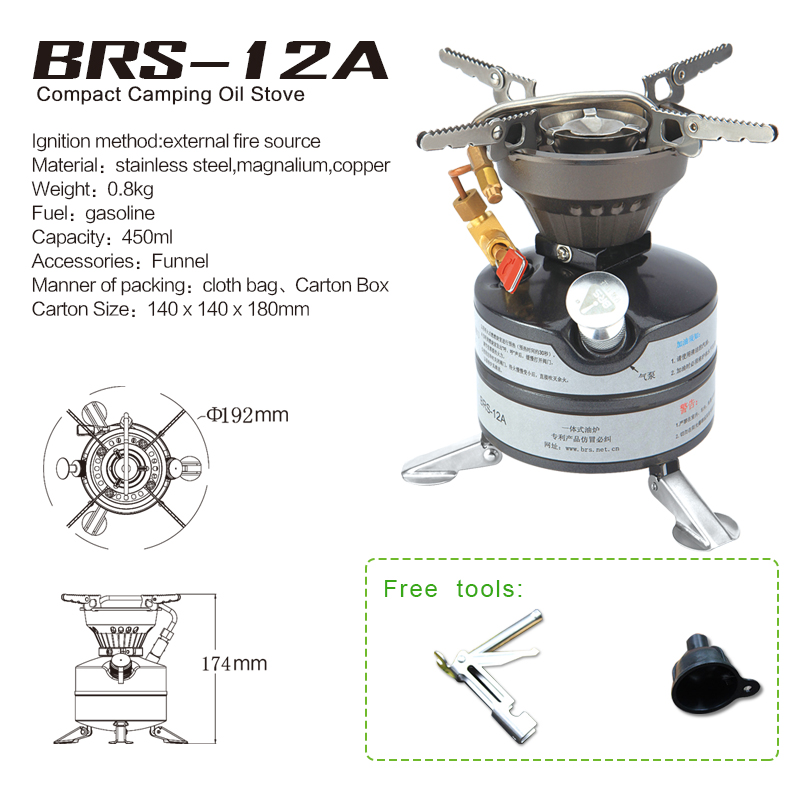
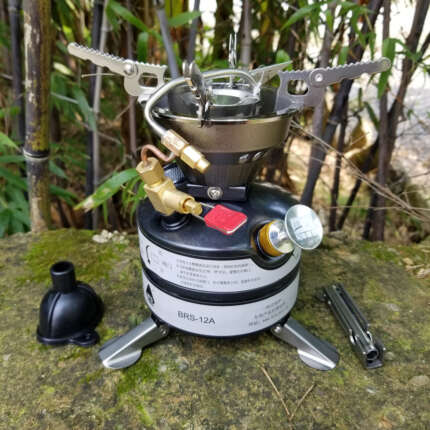
A gasoline camping stove is the workhorse choice for mountaineering teams and backcountry expeditions where fuel reliability matters more than convenience. The BRS12A field oil furnace delivers 2120W of consistent heat output, proven to boil 1 liter of water in 3 minutes 20 seconds at standard air pressure—a critical advantage when operating above tree line or in cold conditions.
Backcountry teams face real challenges when cooking at altitude or in harsh weather. Canister stoves lose efficiency as temperatures drop, and wood fires require fuel that often isn’t available. The gasoline stove operates reliably regardless of elevation or ambient temperature, making it the standard choice for serious mountaineers.
Why Choose a Gasoline Camping Stove
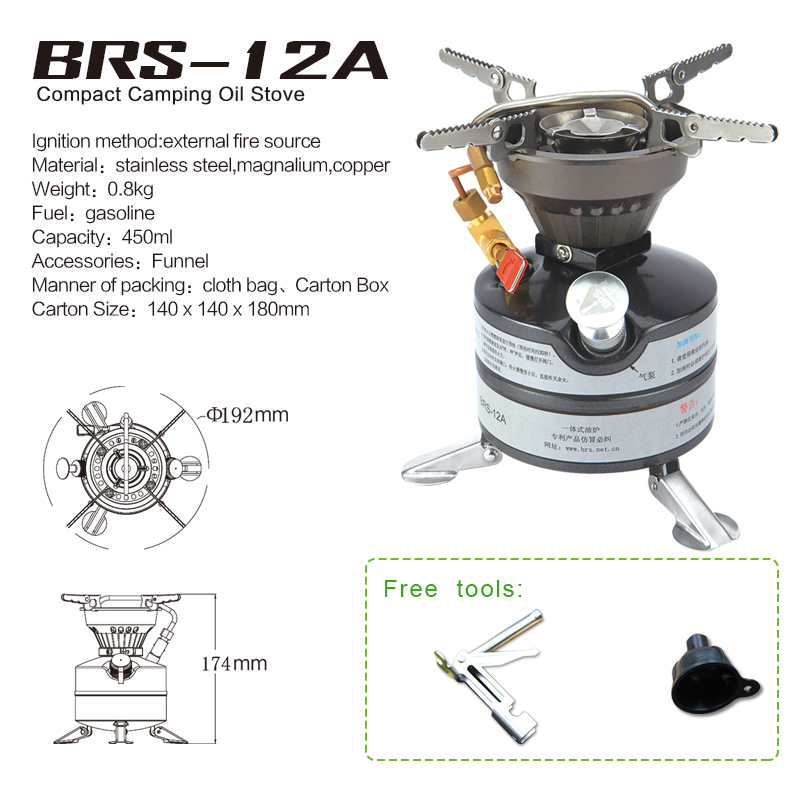
Gasoline fuel remains stable and usable in conditions where other fuels fail. At 185 grams per hour fuel consumption, expeditions can predict cooking costs precisely—roughly $15-20 worth of fuel for a week-long alpine climb. The stove’s magnesium aluminum alloy construction with stainless steel components weighs only 0.56 kilograms, yet handles repeated use across multiple seasons.
Compact dimensions of 192×174mm in expanded form fit easily into expedition food boxes alongside freeze-dried meals and cookware. Users report that gasoline camping stoves respond instantly to fuel adjustments, allowing precise heat control from a low simmer to full boil. This predictability separates field stoves from alternatives when timing meals for team rotations or managing fuel rations.
Gasoline Camping Stove Specifications and Materials
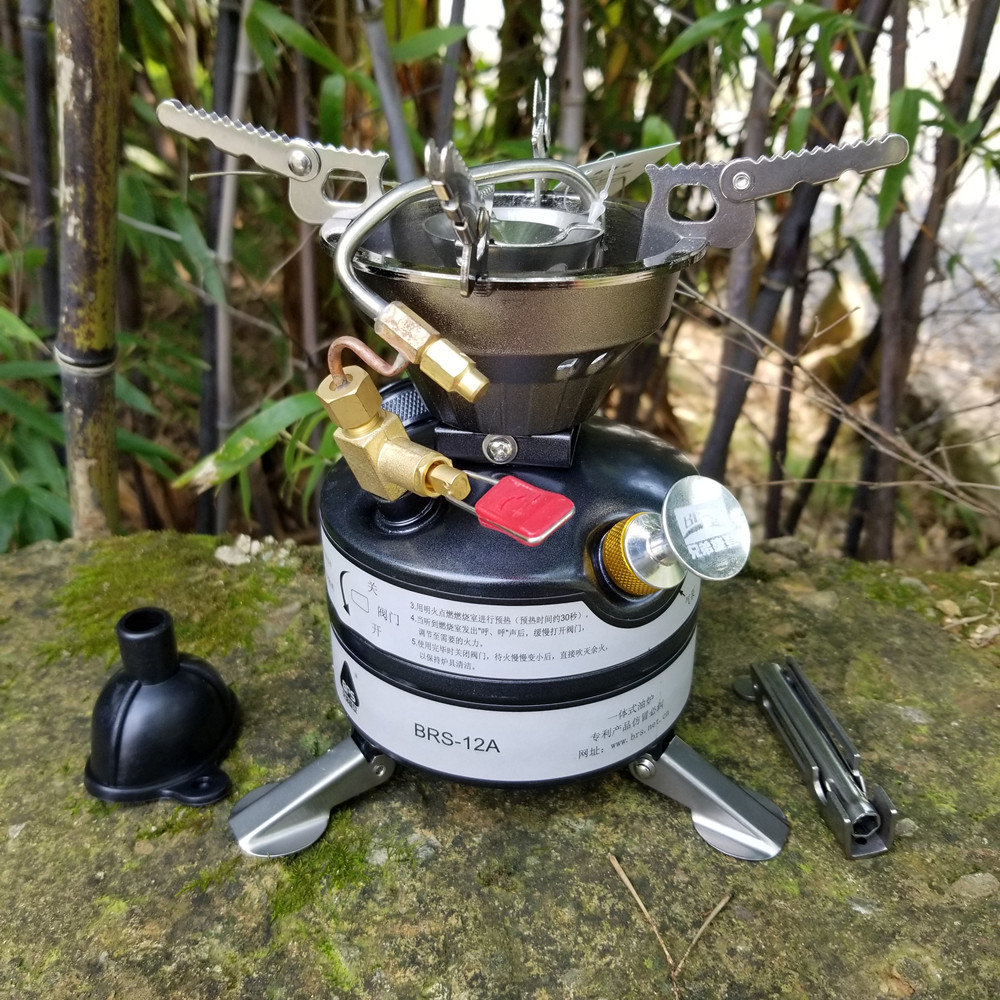
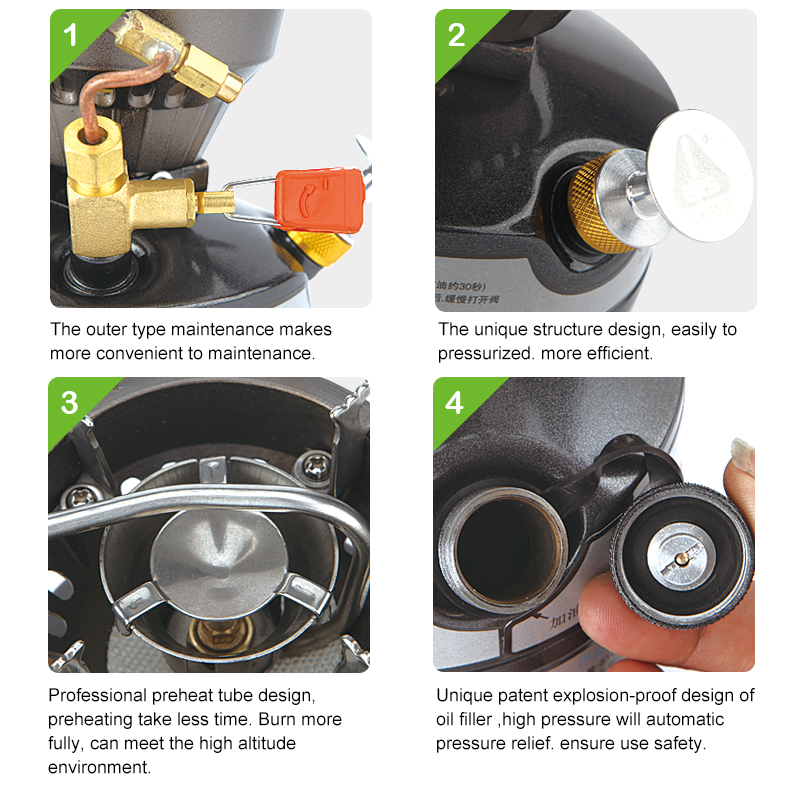
Engineering matters in remote locations. The BRS12A gasoline camping stove uses magnesium aluminum alloy for the main body—chosen specifically because it resists corrosion from altitude and moisture exposure. Stainless steel burner components prevent rust that could compromise fuel flow, while copper elements conduct heat efficiently to cookware.
Real-world scenario: A mountaineering team attempting a 20,000-foot alpine peak needs to melt snow and rehydrate meals at base camp (16,000 feet) and high camp (19,000 feet). Air pressure drops 35% at altitude, yet the gasoline camping stove maintains the same heat output and boiling speed. Canister stoves would perform 40-50% slower at those elevations. The team completes food preparation on schedule, preserving critical rest time before summit push.
The stove arrives complete and ready to use—no assembly required. Fuel consumption of 185g per hour means a standard 1-liter bottle of gasoline runs the stove for roughly 5 hours of continuous heating, easily lasting through breakfast, lunch, and dinner preparations for an expedition team.
Reliability in Backcountry Conditions
Field stoves earn their reputation through performance when alternatives fail. The gasoline camping stove has powered expeditions across every major mountain range and polar expedition. Its simple fuel system—requiring only gasoline, a common liquid fuel—eliminates dependency on specialty canisters that may not be available in remote regions.
Maintenance requires minimal effort. The copper and stainless steel components resist wear, and the magnesium aluminum body won’t corrode even after exposure to snow, rain, and freeze-thaw cycles. Experienced expeditions report that a single gasoline stove functions reliably for 5-10 years of regular alpine use.
For expedition planning, consult REI’s camp stove expert guide to understand fuel options and altitude performance across different stove types. That resource confirms gasoline stoves as the standard for high-altitude mountaineering teams.
When selecting cooking gear for remote expeditions, proper equipment transforms logistics from a constant worry into a solved problem. The gasoline camping stove occupies that critical role—it works when conditions are hardest, burns fuel you can actually procure, and weighs almost nothing compared to its output.
Browse our outdoor gear collection to find complementary expedition cookware, insulated cook pots, and fuel containers designed to work alongside field stoves. Complete your base camp kitchen with tested equipment that functions at altitude and in extreme weather.
| Weight | N/A |
|---|---|
| Option | BRS12A oil furnace |
Why use a gasoline camping stove instead of a canister stove for high-altitude expeditions?
How much fuel does the gasoline camping stove consume, and what's the cost per expedition?
What maintenance does the gasoline camping stove require?

Related products

Portable Camping Stove: Reliable 3500W Butane Burner
Original price was: $89.58.$44.79Current price is: $44.79.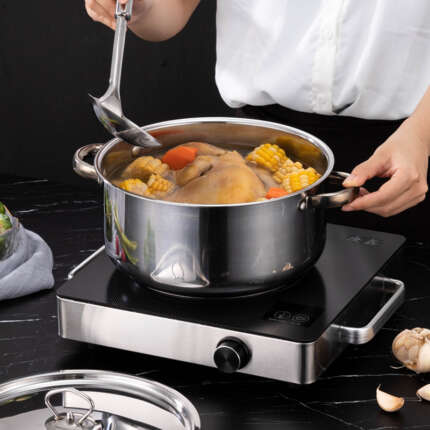


Stainless Steel Steamer Pot: Trusted 2-Layer Design
Price range: $57.59 through $71.99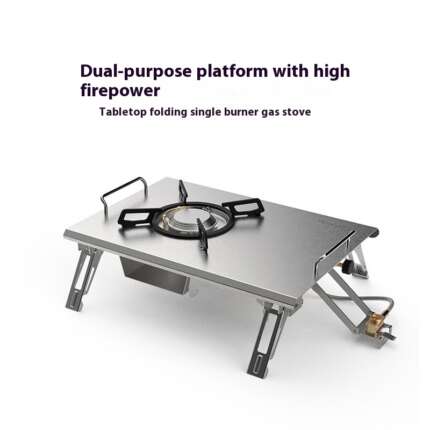

Portable camping stove: Reliable 3-5 Person Gas Cooker
Original price was: $116.99.$93.59Current price is: $93.59.

Camping Baking Tray: Trusted 316 Stainless Steel 2-Size
Price range: $90.39 through $91.19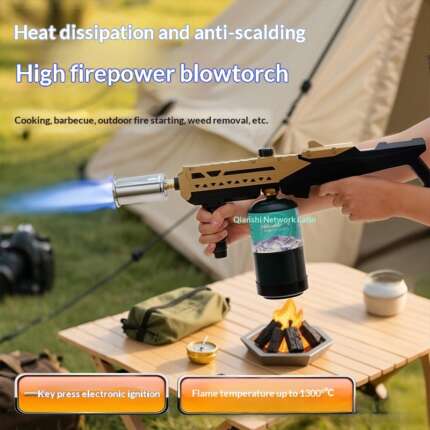

Windproof Camping Lighter: Tested Flame Gun for 3 Seasons
Original price was: $101.32.$75.99Current price is: $75.99.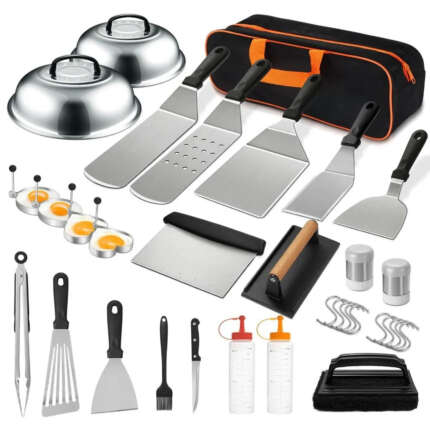



Reviews
There are no reviews yet.