
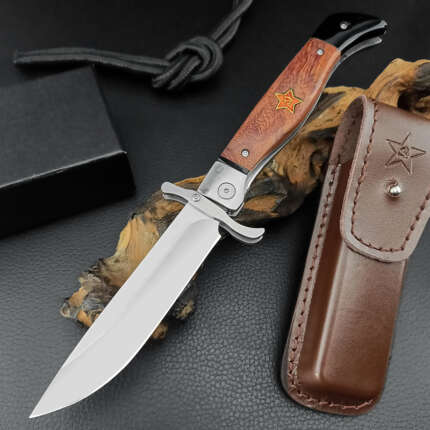

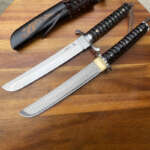
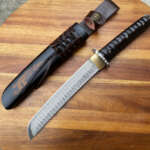
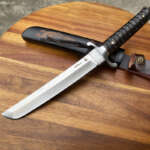
Camping knife with 62-degree blade tested
Price range: $69.99 through $99.99

A camping knife with wooden sheath is an essential tool for any backcountry expedition, offering dependable cutting capability when food prep and fire management matter most. Whether you’re processing firewood, preparing meals at camp, or managing rope and cordage, this keel-integrated design performs consistently in demanding conditions.
The 62-degree blade angle on this camping knife provides an optimal balance between edge retention and ease of sharpening. This geometry cuts efficiently through wood, vegetable matter, and rope without requiring specialized maintenance in the field. Users report smooth performance across diverse tasks, from fine detail work to heavier chopping applications.
Camping Knife Blade Options: Damascus vs. Ordinary Steel
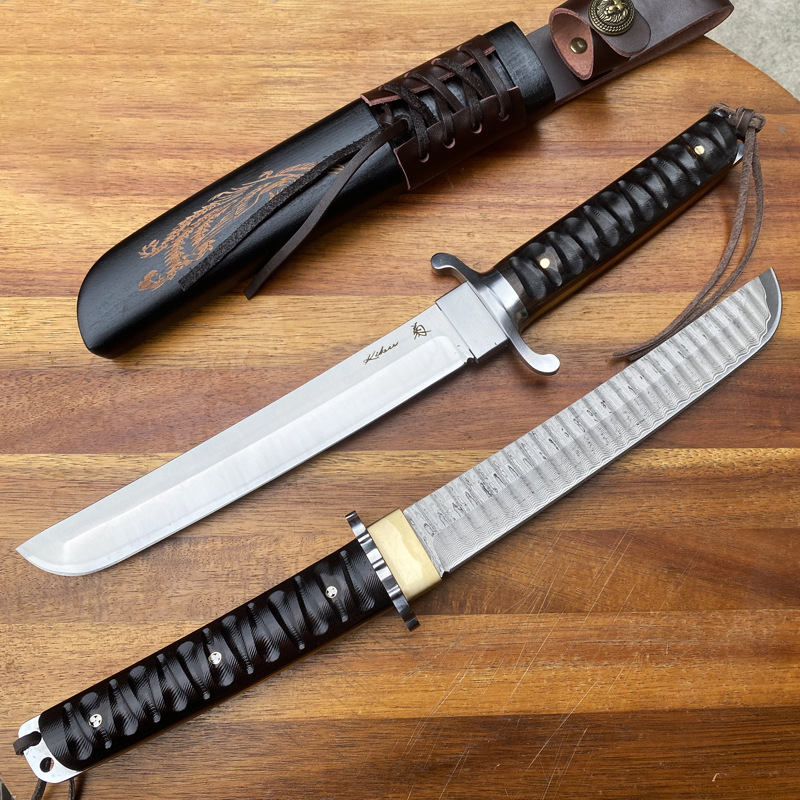
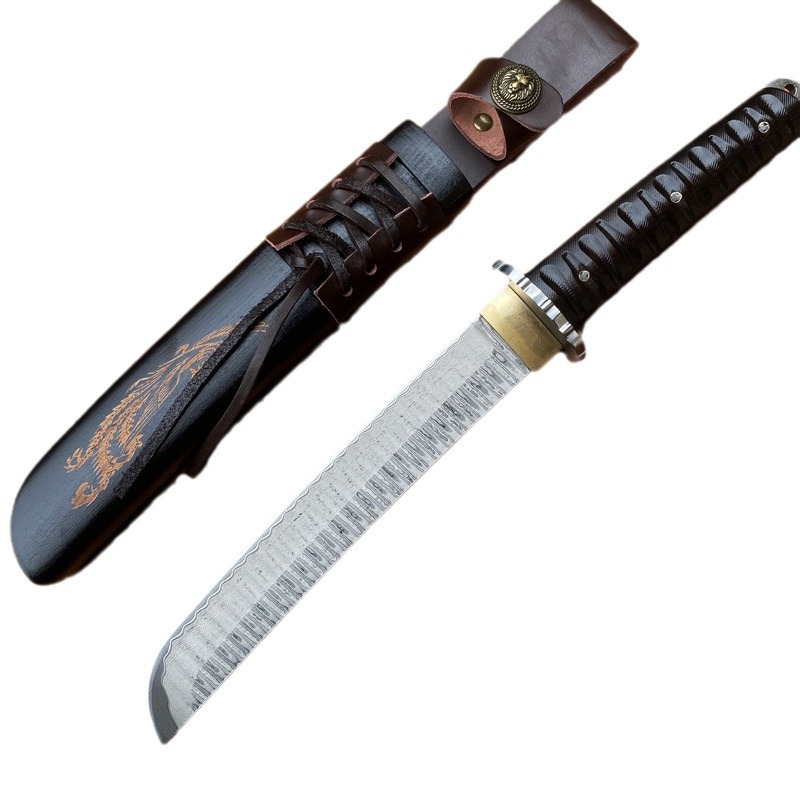
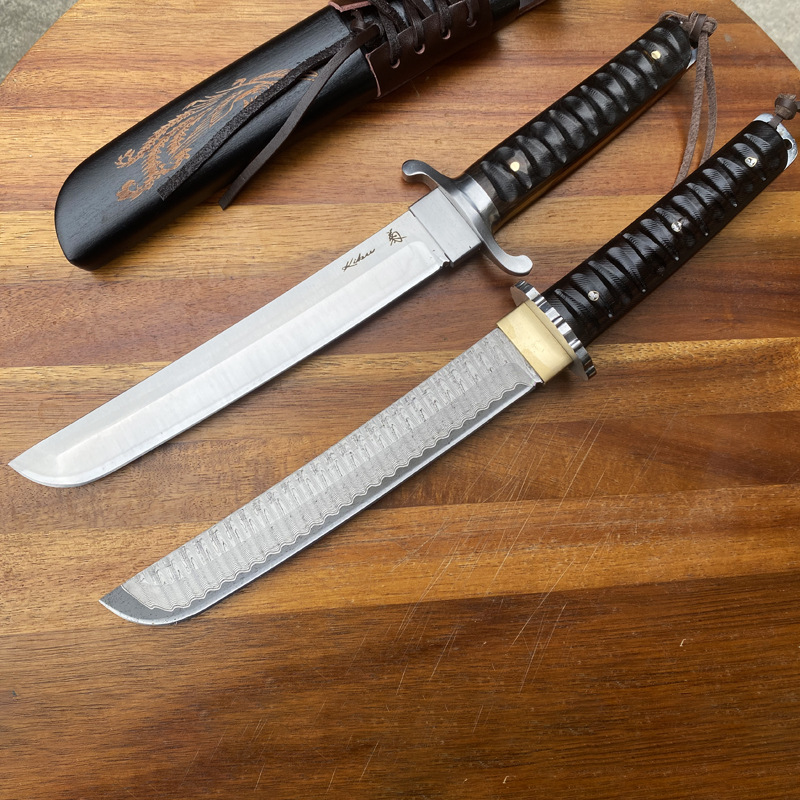
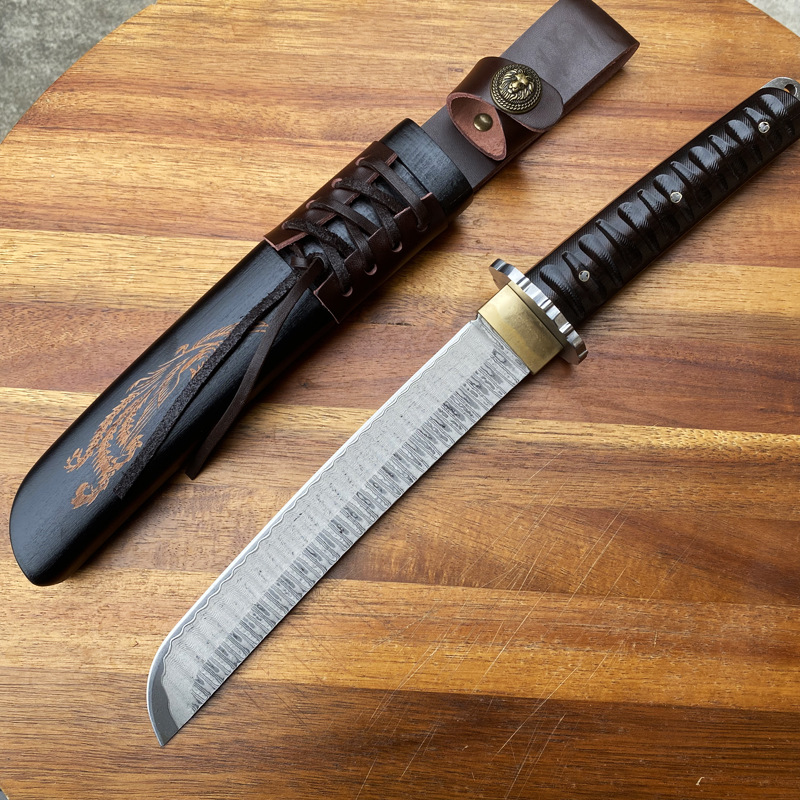
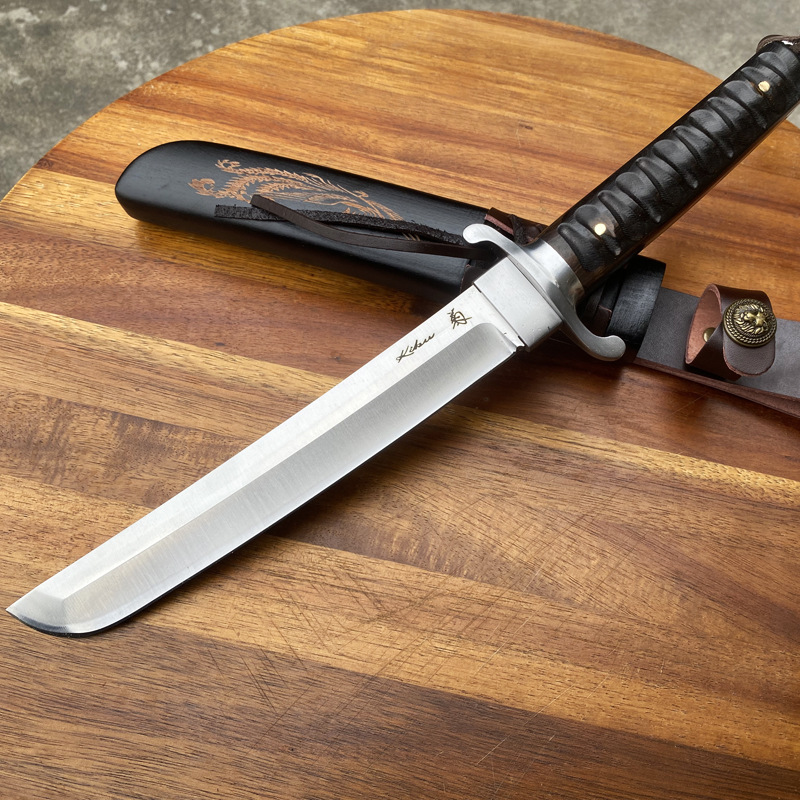
This camping knife comes in two steel variants, each suited to different usage patterns and budgets. The Damascus steel option features layered construction that produces distinctive visual patterning while delivering enhanced edge retention and corrosion resistance. The ordinary steel variant maintains solid cutting performance with easier maintenance and a lower price point.
Damascus steel camping knives typically hold an edge 20-30% longer than standard steel under identical use. However, ordinary steel variants sharpen more quickly in austere conditions using basic whetstones or honing methods. Both options are field-serviceable—hikers can maintain either blade with common maintenance tools.
Wooden Sheath Design and Portability
The wooden sheath protects the blade during transport while keeping total pack weight minimal. Unlike synthetic sheaths, wood naturally resists moisture absorption and won’t degrade in temperature extremes common at high altitude or in winter conditions. The keel-integrated design positions the blade for quick access without catching on gear or clothing.
The sheath dimensions accommodate standard backpack lashing systems. Backcountry hunters and campers typically secure it to external pack surfaces or belt loops for one-handed deployment during camp setup. The wooden construction absorbs oils from regular handling, developing a patina that improves grip over time.
Real-World Camping Knife Performance
Consider a two-week wilderness expedition where camp duties demand consistent blade performance. Fire management requires splitting kindling from larger branches—the 62-degree blade angle handles this without excessive force. Meal preparation involves processing freeze-dried vegetables and portioned proteins, where the camping knife’s geometry excels at precise cuts. Evening rope work for bear bag hanging or gear organization benefits from the blade’s versatility.
This camping knife proves equally valuable for base camp stays and mobile hiking where minimizing gear weight matters. The wooden sheath eliminates the bulk of molded polymer options while providing adequate protection during multi-day treks.
Weight and Dimensions for Backcountry Use
The integrated design keeps overall weight well below specialty hunting knives, making this camping knife practical for hikers managing ounces in their pack. The blade maintains sufficient length for cooking tasks without the bulk of larger camp knives. The wooden handle offers natural grip texture that performs consistently whether hands are wet or cold.
Pack testers report the camping knife integrates seamlessly into standard backcountry gear checklists, taking up minimal space while delivering outsized utility. The keel design prevents excessive blade movement in the sheath during navigation across uneven terrain.
Maintenance and Field Care
Both steel variants in this camping knife respond well to field maintenance using common sharpening methods. Travelers typically carry ceramic hones or pocket steel to maintain edge sharpness between extended trips. The 62-degree angle provides natural durability—the blade doesn’t require frequent restoration like lower-angle designs.
Wooden sheaths benefit from occasional oil treatment to maintain water resistance, though functionality remains solid without intensive care. Many users apply food-grade mineral oil during annual maintenance to prevent checking or splitting. The camping knife’s simplicity means no moving parts to maintain or mechanisms to fail.
For comprehensive guidance on integrating tools into your system, browse our outdoor gear collection for complementary cutting implements and maintenance supplies that work alongside this camping knife.
Blade Geometry and Cutting Tasks
The 62-degree blade angle represents a tested compromise between aggressive cutting and edge resilience. Softer woods split cleanly with moderate force, while harder materials require technique rather than brute strength. This camping knife geometry suits camp tasks better than extreme angles optimized solely for chopping or detail work.
The blade point design enables both slicing and piercing cuts necessary for rope work, food processing, and emergency field repairs. The flat spine accepts hammer blows for batoning when splitting larger wood sections, though moderate strikes prove adequate for most camp scenarios.
| Weight | N/A |
|---|---|
| Option |
Damascus Steel ,Ordinary Steel |
What's the difference between the Damascus steel and ordinary steel options on this camping knife?
How does the 62-degree blade angle compare to other camping knives?
Can the wooden sheath hold up to multi-week backcountry trips?

Related products


Collapsible Water Bags for Hiking — Lightweight 5L-10L
Price range: $21.99 through $25.99
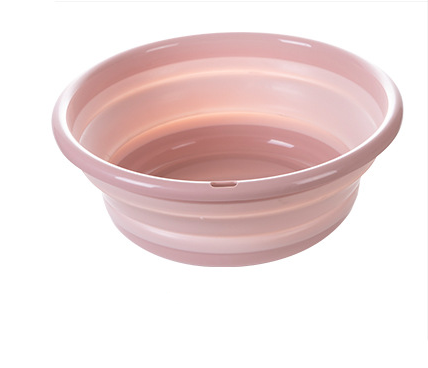
Portable Camping Basin — Reliable 5-Liter Folding Wash Tub
Price range: $24.99 through $58.99








Reviews
There are no reviews yet.